
Repair or Replace? How to Decide When Your Boiler Breaks Down
A straight framework for deciding whether to fix your boiler or replace it — based on age, repair cost, parts availability and what it is costing you to run.
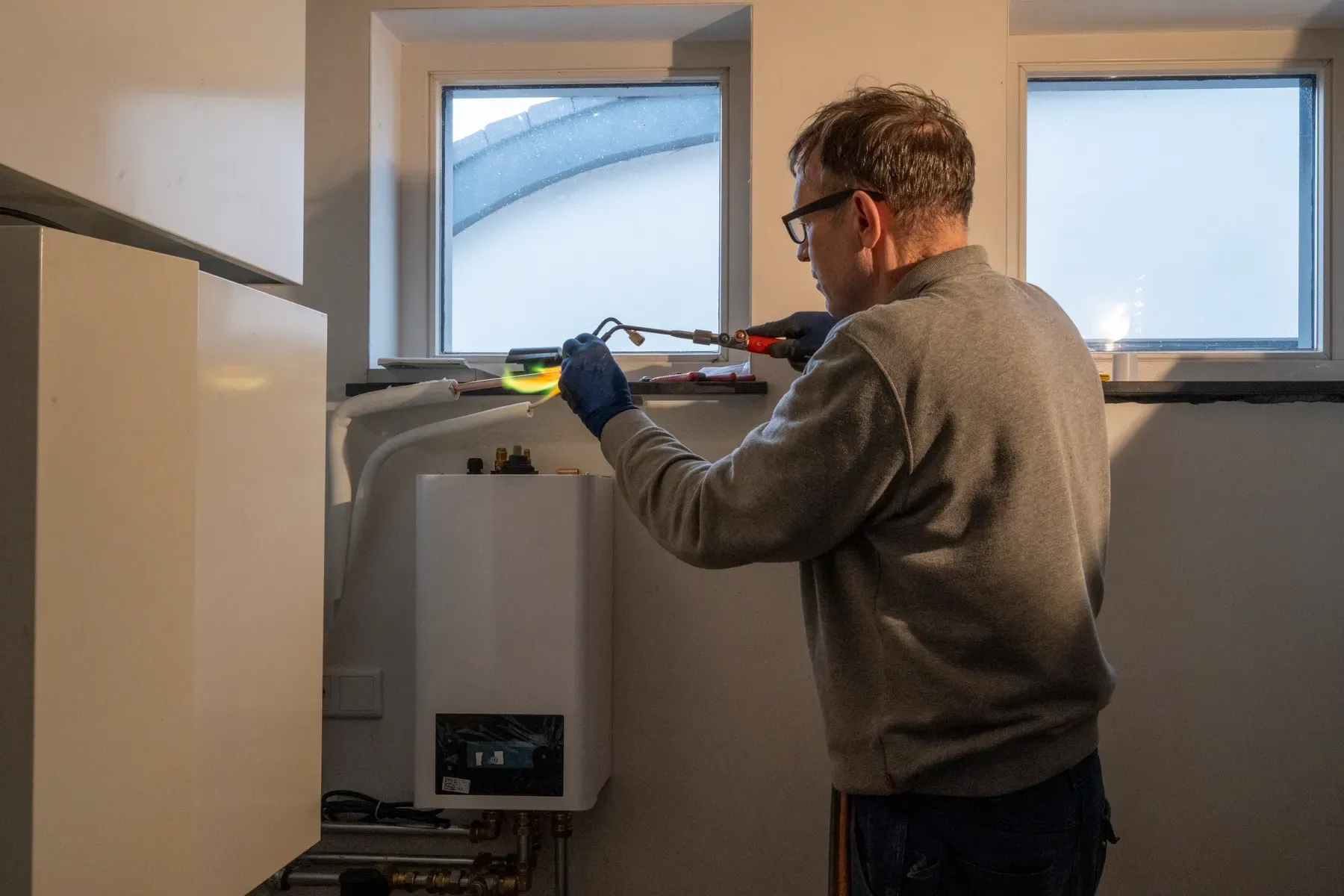
Your boiler has failed, an engineer has quoted a repair, and you have no way of judging whether that is money well spent or money you will spend again in March. Here is the framework we use — and we use it honestly, because we would rather lose a boiler sale than sell you one you did not need.
Start with the age
Age is the single strongest predictor, because it tells you both how much life is left and how available the parts are.
- Under 8 years old. Repair, almost always. The boiler is likely still efficient, parts are readily available, and you may still be in warranty — check before you agree to pay for anything.
- 8 to 12 years old. It depends on the repair cost. Use the one-third rule below.
- Over 12 years old. Replacement is usually the better decision, particularly if the fault is a major component. Beyond about 15 years, parts availability starts becoming a real problem on many models.
The one-third rule
If the repair costs more than a third of what a replacement would, replacing is usually the better call — because you are spending a meaningful fraction of a new boiler’s price on a machine that has already used most of its life.
A £220 fan on a nine-year-old boiler is worth doing. A £700 heat exchanger on the same boiler is not, when £1,795 buys you a new one with a 10-year warranty and a free first service.
The faults that usually mean replace
Some faults are effectively terminal in economic terms:
- Primary heat exchanger failure — the most expensive single part on most boilers
- Persistent leaks from the main body rather than from a joint or valve
- Repeated faults on the same boiler within twelve months — each one is a symptom of a system or a machine at the end of its life
- Obsolete parts — if the manufacturer no longer supplies a component, a repair may not be possible at any price
The faults that are usually worth fixing
Equally, plenty of faults sound dramatic and are not:
- No hot water but heating works — usually a diverter valve, a routine repair
- Pressure dropping repeatedly — often a failed expansion vessel or a pressure relief valve, both economic to fix
- Kettling or banging noises — usually sludge in the heat exchanger, addressed by a flush rather than a new boiler
- Frozen condensate pipe — not a fault at all, and free to fix yourself with warm water
What the old boiler is costing you to run
This is the part most repair-or-replace advice ignores. A boiler from the early 2000s runs at around 70–80% efficiency; some non-condensing boilers from the 1990s are closer to 60%. A modern A-rated condensing boiler runs at 92% or better.
On a household spending £1,200 a year on gas, moving from 70% to 92% efficiency is roughly a £280 annual difference. Over a ten-year boiler life that is £2,800 — which reframes the replacement decision considerably.
Get a second opinion — and be wary of one particular pitch
If an engineer condemns a boiler on a first visit without showing you the fault or the readings, get a second opinion. A legitimate condemnation comes with an explanation and, where the appliance is genuinely dangerous, a warning notice and a disconnection you are asked to sign for.
The other end of the same problem is the engineer who quotes a repair on a boiler that is plainly finished, because a repair is quick money. Both are avoidable by asking one question: what would you do if it were your house?
We answer that question honestly on every visit. If your boiler has five good years left in it, we will tell you — and quote you for the repair. If it does not, we will show you why. Book a diagnostic visit or read more about our boiler servicing and repairs.